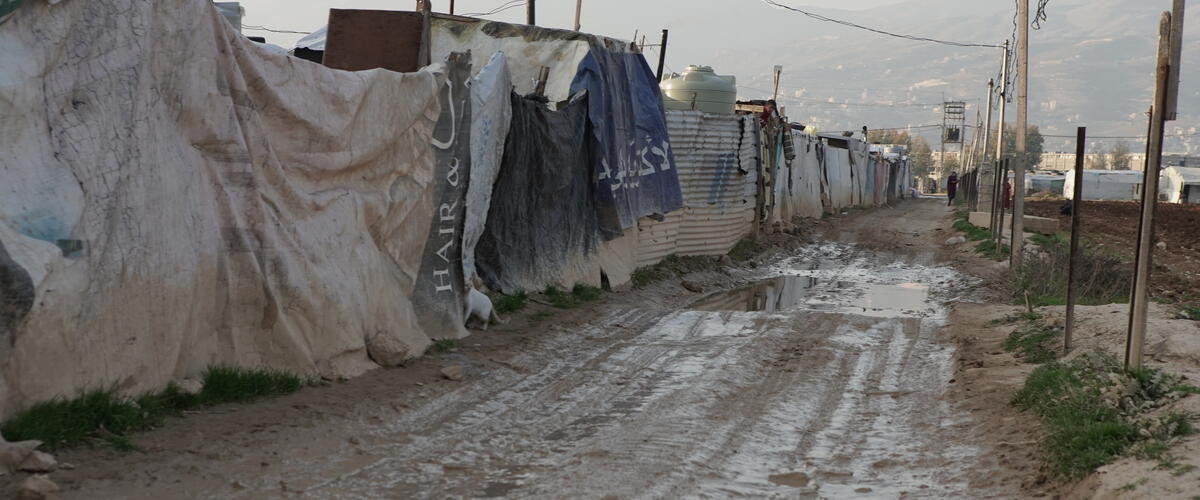

Samira talking to a mother and her baby in the refugee camp in the Bekaa Valley.
Help for refugees and Lebanese alike
"Being able to help the women when they have to care for their newborn babies in a completely overcrowded emergency shelter are the very special moments in my job," says Samira. The 33-year-old works for humedica in Lebanon. She looks after people who have had to leave their homes and are now living in makeshift conditions in the Bekaa Valley. Many Syrians who came here at the beginning of the war in their country have been living in informal tent settlements for 14 years. Some do not yet dare to return because they want to wait and see how their home country develops now that the rule of former ruler Assad has ended. Others cannot afford to return home, they have nothing left in Syria to build on.
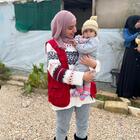
"We ensure that people who would otherwise not be able to afford treatment also receive it."
But it is also increasingly the Lebanese that Samira has to look after. The country's economy has been in decline for a long time. Inflation is high and many Lebanese can no longer afford what they need to live. The conflict in the Gaza Strip has further exacerbated the situation for many people. Especially in the south, people are suffering from the shelling from Israel, which is a consequence of the Gaza conflict. "When things were really bad, people fled to us in the Bekaa Valley. That was a terrible time. People had to hold out in overcrowded emergency shelters, without privacy or peace," Samira recalls. She was particularly moved by the women with their newborn babies.
humedica team will not be deterred
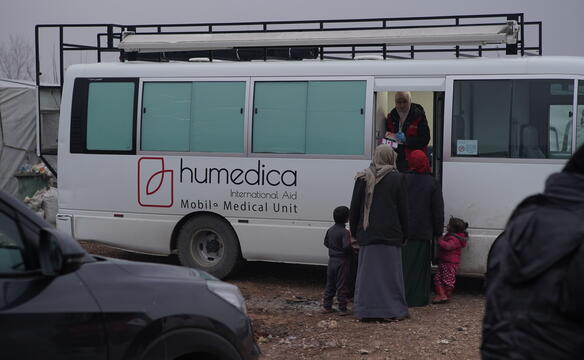
Humedica uses the clinic bus to treat Syrian refugees in Lebanon.
The humedica team in Lebanon is providing medical care for people in the Bekaa Valley. "We ensure that people who would otherwise not be able to afford treatment also receive it. We train health workers in the refugee camps to look after the people, even if we can't get there with our clinic bus," she explains, adding: "We don't know how the Gaza conflict will develop in the future. We have completely changed our work, as our freedom of movement was also restricted at times due to the shelling of the country."
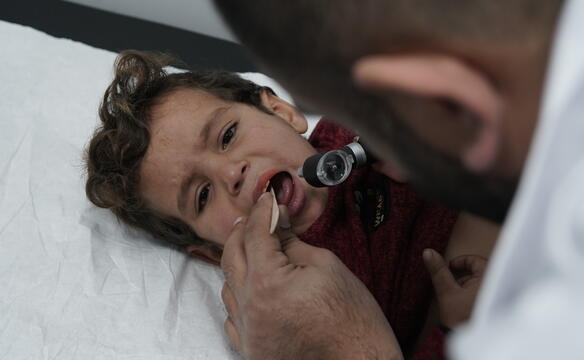
The humedica team in Lebanon is not fazed by challenges like these. "Humanitarian aid in Lebanon is more important than ever," says Samira. "As the crisis progresses, the need for emergency aid, long-term economic solutions and psychological support is growing." The latter has been a new focus of humedica's work in Lebanon since the start of the conflict. In order to be able to reach everyone despite possible security measures, even if the aid workers are unable to travel in person, psychological support is now also being provided online.