


Our quality standards and memberships
Our quality standards and memberships
To ensure that our aid is effective, humedica is guided by clearly defined quality standards. They ensure that our work is transparent, efficient and adapted to current challenges - for the best possible support in every situation. As part of national and international networks, we work closely with partners to further develop and improve humanitarian aid. Our memberships stand for exchange, shared values and a commitment to high standards.

CHS Alliance
The CHS Alliance is a global network of humanitarian aid and development cooperation organizations committed to taking responsibility and putting people affected by crises at the heart of their actions. This is based on the Core Humanitarian Standard (CHS). By becoming a member, humedica undertakes to strive for the standards in all projects and within the organization and to complete an accompanied self-assessment every two years. Humedica officially completed the CHS self-assessment in October 2025.

German Humanitarian Aid
As a permanent member of the Humanitarian Aid Coordination Committee at the Federal Foreign Office of the Federal Republic of Germany, humedica is guided by the twelve basic rules of German humanitarian aid abroad.

DZI donation seal
Every year, the donation seal of the German Central Institute for Social Issues (DZI) certifies that humedica handles donations carefully and responsibly.

Emergency Medical Team (EMT)
As a certified Emergency Medical Team of the World Health Organization (WHO), humedica provides efficient medical aid after disasters without burdening local resources.

Transparent Society Initiative
humedica stands for transparency. We follow the voluntary commitment of the Transparent Civil Society Initiative and publish detailed information on our activities, statutes, structure and use of funds.

International Red Cross and Red Crescent Movement
humedica works strictly in accordance with the Code of Conduct of the International Red Cross and Red Crescent Movement (IFRC), which describes the humanitarian principles of humanity, impartiality, neutrality and independence.

VENRO
humedica is a member of the Association of German Development and Humanitarian Aid Non-Governmental Organizations (VENRO), which is committed to shaping globalization and overcoming global poverty in a just way.
Our guidelines
Binding principles and careful internal reviews are the prerequisite for effective work. That is why humedica is committed to implementing the following internal guidelines in addition to various quality standards and memberships:
Our Code of Conduct describes the values and basic principles by which we act. It provides clear guidelines for respectful, responsible and transparent behavior - for all humedica employees, volunteers and members of the Management Board and Supervisory Board.
We are committed to an inclusive, fair and respectful culture. Our guidelines on inclusion, diversity and gender equality create a binding basis for upholding the dignity of all employees, volunteers, partners and beneficiaries.
Our anti-corruption policy serves to effectively prevent and combat fraud and corruption - both in our projects worldwide and in our internal administration in Germany. It applies to all levels and areas of our work and creates binding standards for acting responsibly and with integrity at humedica.
This policy makes it clear that humedica firmly rejects all forms of sexual exploitation, abuse and harassment. It serves as a preventive measure and sets out binding measures and procedures to protect those affected, investigate incidents and act consistently - for a safe environment in all areas of our work.
With this policy, humedica reaffirms its goal of actively protecting children from harm. It sets out clear rules of conduct and protective measures that apply worldwide and in all areas of work for all full-time and voluntary employees and partner organizations.
Review impact, further develop support
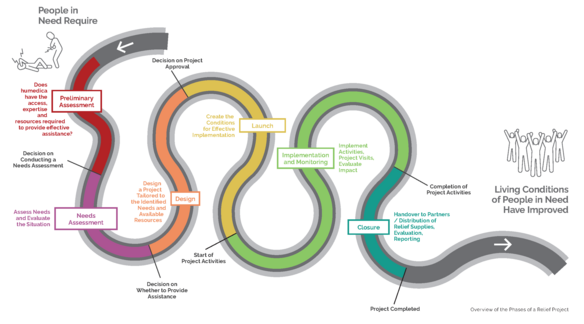
Effective aid also requires monitoring and continuous improvement. humedica ensures the effectiveness and quality of the projects through systematic monitoring and clear objectives. Regular reports, on-site visits and the four-eyes principle enable sound internal control. This is supplemented by external audits - for example by independent experts. In this way, important findings are incorporated into the further development of current and future aid measures so that help arrives exactly where it is needed.


