Global, sustainable development for a fairer future

We firmly believe that the advancement of women contributes to the fight against poverty and the creation of sustainable societies for peace and prosperity. Secure access to food, clean drinking water, healthcare and education are necessary prerequisites. Independent incomes enable self-determination and independence.
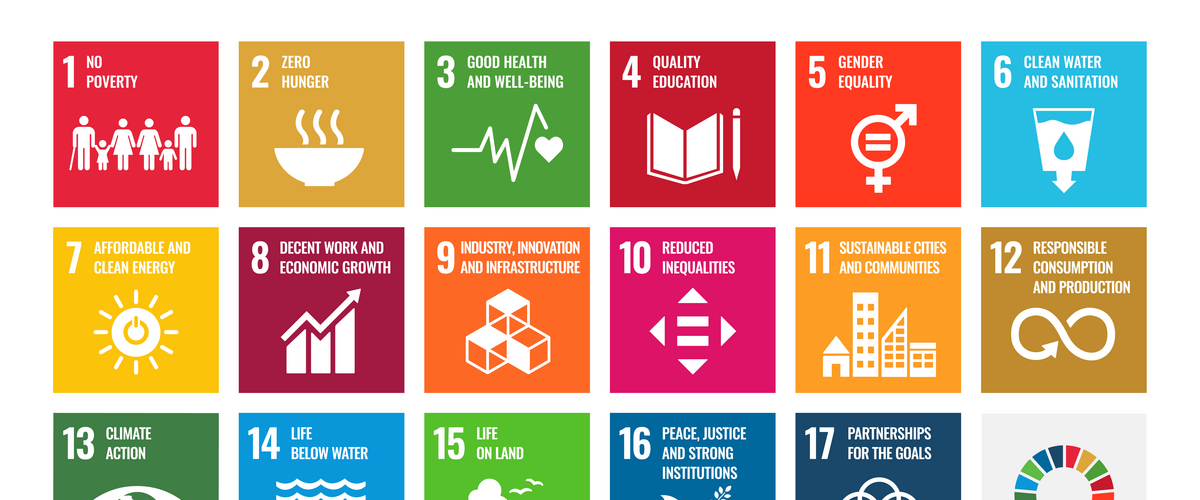
With the 2030 Agenda, the United Nations adopted the 17 Sustainable Development Goals (SDGs) - one of their core concerns is the empowerment of women and girls. Because equality is not only a human right, but also a prerequisite for sustainable development, peace and prosperity.
Overcoming poverty - creating prospects
One in ten women worldwide lives in extreme poverty, with women in sub-Saharan Africa being particularly affected. humedica supports women in Ethiopia and Pakistan in generating their own income and thus providing for their families. Through training courses, they learn the basics of entrepreneurship, develop business ideas and, where necessary, receive start-up capital. Amina in Ethiopia, for example, was able to open her own tailor’s shop – a step towards independence and self-determination.
Amina's story is an example of how humedica's support works in Ethiopia. She received food and hygiene packages as well as training to set up her own business. She now runs her own small business selling clothes she has sewn herself. This enables her to provide for herself and her family independently.
Business opening in Ethiopia
Amina's story is an example of how humedica's support works in Ethiopia. She received food and hygiene packages as well as training to set up her own business. She now runs her own small business selling clothes she has sewn herself. This enables her to provide for herself and her family independently.


Fighting hunger - ensuring food security
Every fourth woman worldwide suffers from food insecurity - and without holistic changes, this figure is unlikely to improve by 2030. Women and girls are particularly hard hit in Africa. humedica is therefore implementing projects in Madagascar, Mozambique and Kenya to ensure access to food and empower women to feed their families sustainably.
humedica unterstütze Luisas Familie in Mosambik mit Lebensmittelpaketen. So konnten sie die Zeit überbrücken, in der heftige Regenfälle ihre Ernte beeinträchtigten.
Food for Mozambique
humedica supported Luisa's family in Mozambique with food parcels. This enabled them to bridge the period during which heavy rainfall affected their harvest.
Project examples


Safeguarding health in emergencies - not leaving women alone
In regions with a weak medical infrastructure, the risk for mothers and children is particularly high: In sub-Saharan Africa, for example, the likelihood of suffering complications during pregnancy and childbirth is around 130 times higher than in Europe. Studies show that the number of maternal complications and deaths during childbirth decreases significantly when qualified healthcare personnel take over the care. humedica is therefore specifically committed to providing medical care for women in crisis and disaster situations and training medical professionals.
Another example is Ukraine: in many villages, where mainly women and older people have been left behind, there is no longer any functioning healthcare provision. With mobile medical teams, humedica brings medical aid directly to the people - and gives them hope in a time characterized by uncertainty.
humedica-Ärzteteams besuchen abgelegene Dörfer, in denen es keine medizinische Infrastruktur mehr gibt. Einfache Alltagssituationen werden zu großen Herausforderungen: Dazu gehört ein Arztbesuch oder die Versorgung mit Medikamenten. Denn vielerorts sind Krankenhäuser zerstört und Arztpraxen verlassen. Es fehlt an überlebenswichtigen Behandlungen und psychologischer Betreuung.
Medical teams in Ukraine
humedica medical teams visit remote villages where there is no longer any medical infrastructure. Simple everyday situations become major challenges: This includes a visit to the doctor or the supply of medication. In many places, hospitals have been destroyed and doctors' surgeries have been abandoned. There is a lack of vital treatment and psychological care.
Project examples


Water and climate - protecting the foundations of life
Currently, 380 million women and girls live in an environment with high or critical water stress and this number is predicted to almost double by 2050. More than one in four women worldwide still have no safe access to drinking water. At the same time, climate change is exacerbating the situation: droughts, irregular rainy seasons and increasing water stress are threatening harvests and worsening the livelihoods of entire families.
humedica therefore supports women not only with the construction of wells and access to clean water, but also with climate-resilient solutions. Through training on sustainable cultivation methods, efficient irrigation and robust plant varieties, women learn how to provide for their families despite extreme weather conditions.

Drinking water for Kenya
With Humedica's help, women like Takisha now have a drinking water point close to their home and therefore more time for their family, their animals and household chores.
Project examples


Your regular donation empowers women worldwide
Women in crisis and disaster areas need more than short-term help - they need a reliable perspective. With a regular donation, you enable humedica to plan long-term projects and strengthen women in their independence.