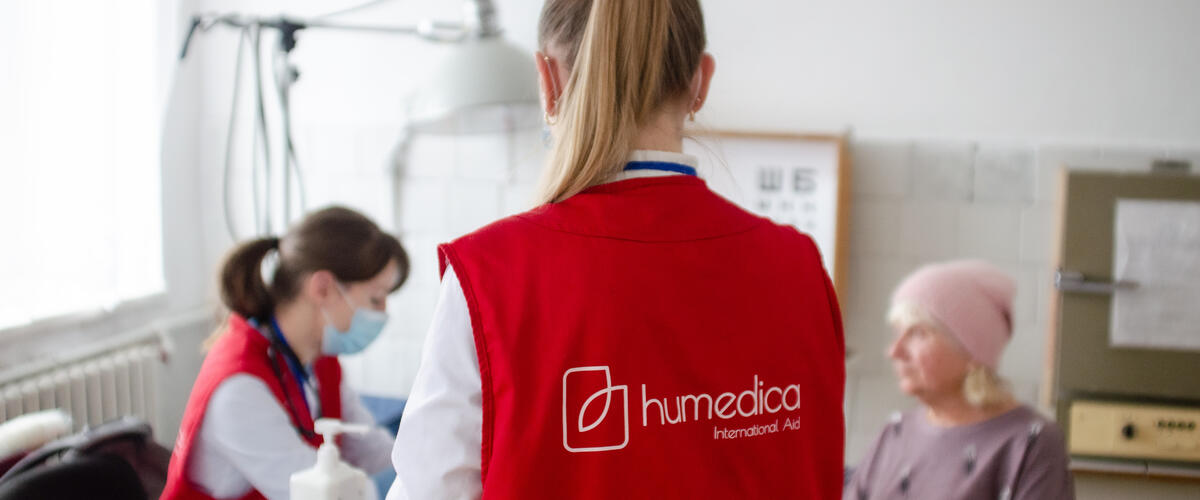
Medical help where it barely exists
The nearest doctor is 26 kilometers away, the pharmacy 40. What these figures mean can be seen in everyday life near the front line between Ukraine and Russia: Whoever could, left the villages. Those who still live here made a conscious decision to do so or - like most of them - were unable to leave for health reasons, for example. The few doctors that still exist in the area are either looking after far too many patients or are old themselves. In addition, roads are destroyed, transportation options are limited and there is a constant threat of drones and air strikes.
This is precisely where humedica comes in: with mobile medical teams that regularly travel to remote locations. The teams bring:
- doctors from various specialties
- medical equipment such as ultrasound
- a mobile pharmacy with urgently needed medicines
Krystyna is a doctor and part of the humedica medical teams that regularly travel to places near the front line. They are usually on the road with several cars, doctors from different specialties and lots of equipment. Treatment is provided wherever there is still a roof over their heads. This can be a community room, but sometimes also a private home.
When we see that people are already queuing up when we arrive and how urgently our help is needed, it really motivates us.
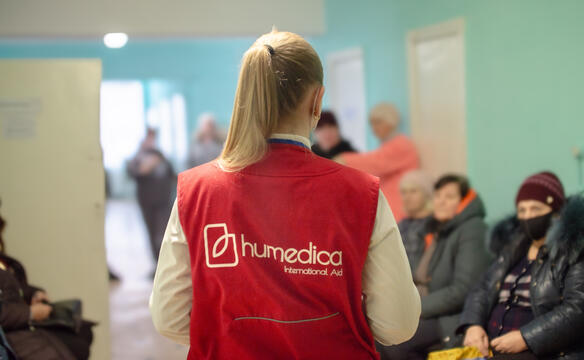
Deployment in danger: when help becomes a risk
Working near the front is associated with real risks. Aid workers report overflights by military aircraft, visible destruction and the constant threat of shelling.
And yet the teams regularly travel to these areas.
One key motivation remains constant: the knowledge that their work is vital.
This motivation is crucial - because without it, it would hardly be possible to work under such conditions.
Safety has top priority
humedica follows a clear principle: the safety of employees always comes first. This is why every assignment is prepared in detail and continuously reviewed.
The most important safety measures include:
- Daily assessment of the safety situation on site
- Communication with other organizations
- A permanently stationed safety manager in Ukraine
- Clear assignment approvals only for moderate risk situations
A mission only takes place if the situation is deemed acceptable.

The safety of our employees is our top priority. That's why we call the team every evening to see what the situation is like.
Preparation determines safety
Ukraine is the only country in which humedica operates where a security manager is permanently on site. They have the experience and mentality to work in a crisis. Networking with other organizations working on the ground is also an important factor. In addition to assessing the situation, preparation plays a crucial role.
Before each deployment, the teams check:
- personal protective equipment
- medical equipment
- medical supplies
- planned route
At the same time, they also prepare themselves mentally.
This combination of technical and mental preparation helps them to remain capable of acting even in uncertain situations.
In the event of an emergency, the teams are also equipped to survive independently for several days.
Mental stress: the invisible state of emergency
The biggest challenge is often not the acute danger - but the constant stress. "The situation in Ukraine is extreme. I don't think everyone here in Germany understands the pressure it puts on employees. We also underestimated this and strengthened our team," says Cetta, outlining the main challenge. Because, unlike in a planned deployment or immediately after a disaster, the psychological strain is not over after two weeks.
Helpers live and work in an environment characterized by uncertainty:
- Air alarms
- Nightly searching for shelter in bunkers
- Caring for family and loved ones
"In Ukraine, the stress is extremely high because our employees' families also live there and are affected," reports Cetta. He was there himself and knows: "It's not over at home - you're in your room, the alarm goes off, you go to the bunker and can't sleep. You're in the middle of this crisis, not just there."
For many of humedica's Ukraine team, this psychological strain has been a permanent condition for years. Some of them fled within the country back in 2014 after the first Russian attacks on Ukraine. They saw how their hometowns were devastated and destroyed. They lost their homes and had to seek refuge in other regions, rebuilding their lives from scratch twice. Perhaps that is why they understand better what moves the people in the abandoned villages along the front line.
The psychological burden is therefore a constant companion.
humedica responds to this by including psychologists in the teams wherever possible. This is because psychological support is increasingly needed in addition to medical help.
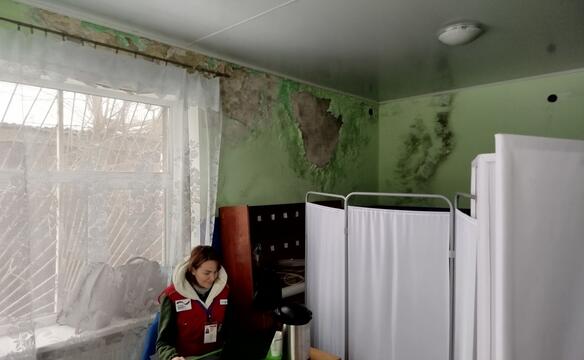
We are driven by the knowledge that we are doing something vital.
Why this help is indispensable
For the people in the affected villages, humedica's support means more than just medical care.
It means:
- access to vital treatment
- concrete relief in everyday life
- a bit of security in uncertain times
Many of those affected say clearly: without this help, their situation would be much worse.
This is precisely why the teams continue their work - despite all the challenges.
What humedica actually does
humedica is helping in Ukraine with a clear approach:
- Mobile medical care near the front line
- Provision of medicines and equipment
- Psychological support for those affected
- Close cooperation with local partners
- Continuous adaptation to the security situation
The goal: to give people access to medical aid even under extreme conditions.
Frequently asked questions about humedica's aid in Ukraine
Operations take place in an uncertain environment. However, the risk is reduced as much as possible through daily situation assessments, safety management and clear rules of engagement.
Many people are unable to flee due to age, illness or lack of resources. Others make a conscious decision to stay, for example for family or personal reasons.
Donations make mobile clinics, medicines, protective equipment and psychological support possible. They ensure direct help for people without access to medical care.