
What does safety mean at humedica?
We are redesigning the entire security system at humedica. Because humedica is a small organization, we are also working together with the project managers. We are making good progress and are 80 percent complete. For example, there are new guidelines and we can now offer almost all safety training in-house. This costs less money and we can adapt the training courses.
Networking with other NGOs (non-governmental organizations, editor's note) is also important. We have a signal group where we can help each other. That helps in complicated situations. If you know people who are already working there, you don't go into a country blindly.
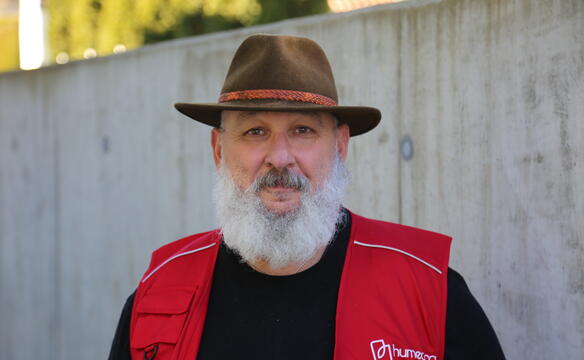
Michael Cetta is safety manager at humedica
I am also in constant contact with our travelers. They write when they have landed in the project country or arrived at the hotel. That way, we always know where our colleagues are at any given time.
How does humedica prepare employees for trips and assignments?
Some preparations are necessary for a trip in terms of safety. The prerequisite is that all the necessary training has been completed. Then there is a world map showing the security level for each country. Germany, for example, has level 1 and we create a briefing for each country. There is also a separate briefing for countries with a higher security level. In the country of travel itself, our colleagues then receive another security briefing from the country office or our partner. And we talk to other NGOs (non-governmental organizations, editor's note) that have local contacts.
How does humedica assess security in project and mission countries?
We start by obtaining general information from the embassies. Another source is the International NGO Safety Organization (INSO), which is an international aid organization for NGOs. They help with information and training. You can enter your travel route on Factal, an international safety information platform. If there is a problem somewhere, there is an alarm.
How are employees experiencing the war in Ukraine?
The stress level in Ukraine is extremely high because our employees' families also live there and are affected - the alarms go off every day. We have two employees whose homes were hit by rockets - fortunately they and their families were unharmed. This is something completely new: it's not over at home - you're in your room, the alarm goes off, you go to the bunker and can't sleep. You're in the middle of this crisis. There's a lot of psychological pressure on the team. It's difficult. It was not an easy decision to continue working there.
We are in contact with the team every evening and are monitoring the situation closely.
How does humedica protect mobile medical teams in Ukraine?
We had to shut down one of our programs due to the current situation. The situation in Ukraine is extremely tense. I doubt that everyone in Germany fully understands the enormous pressure this puts on employees. We initially underestimated this strain and therefore strengthened our team.
We are in contact with the team every evening and are monitoring the situation closely. Ukraine is the only country in which humedica is working directly on the ground, where a permanent security manager is also on duty. He has the experience and mental strength to work professionally in such a crisis and support the team.
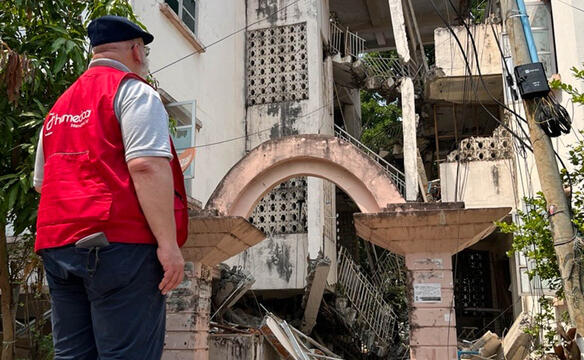
After a disaster like the earthquake in Myanmar in 2025, the safety situation on the ground must first be reviewed
What role do trust and faith play in humanitarian aid?
Through faith, we talk on a different level. People trust us, it's a different kind of relationship. On our way to Myanmar after the 2025 earthquake, a priest in Thailand put us through. That's how we got a visa. Without faith, we wouldn't have been able to enter the country. In Myanmar, we visited a church and made contacts there.