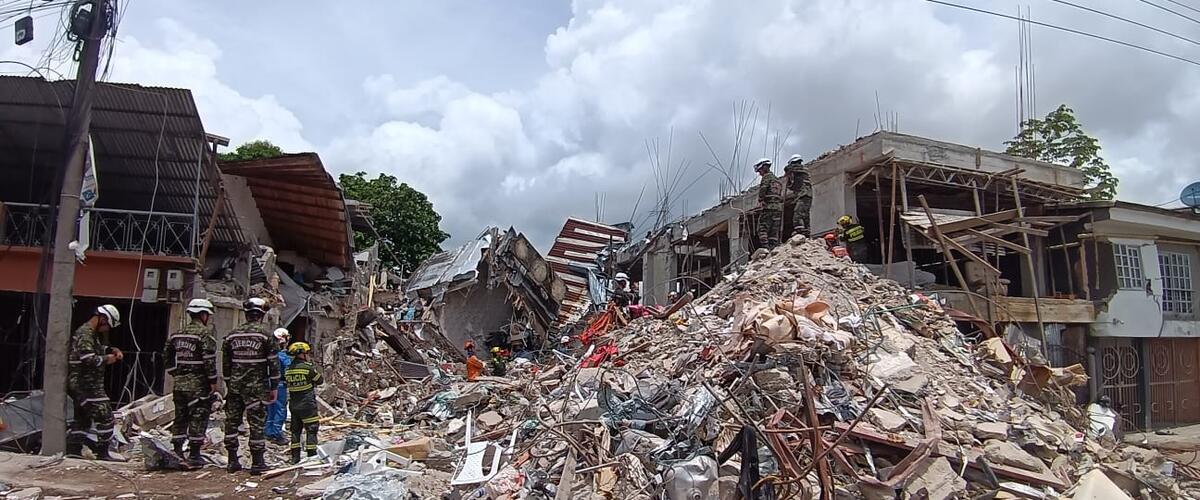
Strong earthquakes in Venezuela, Colombia, and most recently Peru demonstrate just how active the subsurface is in northern and western South America. But why does the earth shake so frequently there? The answer lies in the movement of tectonic plates.
How do earthquakes occur?
The Earth's surface consists of several large plates that are constantly moving. When they come into contact with one another, they can become locked together at their boundaries. This causes stress to build up. If this stress is suddenly and abruptly released, an earthquake occurs.
To be more precise: Elastic energy accumulates in the rock over years or decades, much like in a stretched spring. This energy is eventually released abruptly along fracture lines in the Earth’s crust, known as faults. This type of earthquake, triggered by plate movements, is responsible for most major earthquakes worldwide, including those in South America.
Why are there so many earthquakes in South America?
In western South America, the Nazca Plate is subducting beneath the South American Plate—a process that shapes seismic activity along the entire western margin of the continent. In Colombia, a second active boundary is present in the north, where the South American and Caribbean plates are pressing against each other. This double plate boundary makes Colombia one of the most seismically active countries on the continent.
Why is the earth shaking in Venezuela?
Further north, the same two plates—the Caribbean Plate and the South American Plate—meet in a particularly complex zone: here, parts of the movement occur as the plates slide past each other laterally. Tension can build up here as well and be released in sudden bursts, as was the case with the strong earthquakes in Venezuela in late June 2026.
Peru is also located in this active zone
The fact that Peru also experienced an earthquake on August 20, 2026, is due to the same Nazca Plate, which subducts beneath the South American Plate here. The quake occurred at a relatively deep depth of about 99 kilometers, which often limits the impact on the surface—consequently, it was significantly less severe than the previous quakes in Venezuela (over 6,400 deaths) and Colombia (at least 319 deaths), making it the third major earthquake in the region within two months.
An earthquake is more than just plate tectonics
For the people in the affected regions, however, an earthquake is more than just a geological event. Within a matter of seconds, their daily lives can change dramatically.
That is precisely when it is crucial that aid reaches those in need quickly.
humedica provides aid in Venezuela and Colombia with food, clean drinking water, medical care, and psychological support. In addition, hygiene kits are being distributed, because gespecially after earthquakes, when water lines are damaged, the risk of diseases such as cholera or other diarrheal illnesses increases significantly.