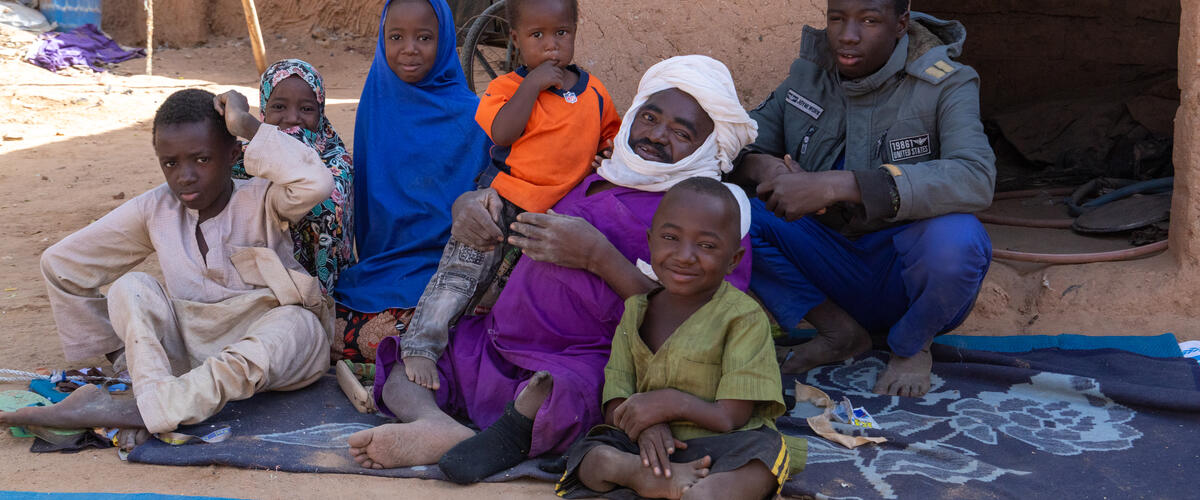
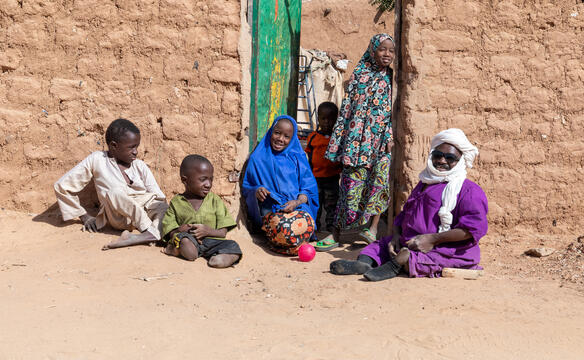
Musa and his family in front of their house.
So his children wouldn't have to beg
Musa was born and raised in Tchintabarden. His life took him to Burkina Faso, then to Nigeria, and back home again. Today, he sits in his yard and weaves cords from scraps of fabric. Piece by piece, his children hand him the material. He can barely see on his own anymore. Nevertheless, he tries to continue providing for his family.
Musa used to ride his bike from market to market. He sold what he had woven and was able to earn at least a little money. Today, that’s hardly possible anymore. He has a physical disability, and his eyesight is getting worse and worse. “I don’t know what to do,” he says. “I trust in God.”
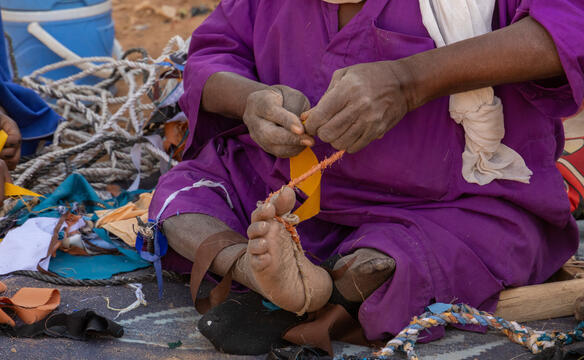
Musa weaves cords to sell them. He uses his hands and feet to do this.
When Going to School Becomes a Challenge
What weighs most heavily on him is not his own illness. It is the question of how his children will eat the next morning. His son Abdou is in fourth grade. But hunger and worry have set him back. When Musa had to spend seven months in Niger’s capital, Niamey, for treatment, there was no one at home to take care of them. Abdou dropped out of school during the year and is now repeating the grade.
The other children want to learn, too. But several of them have disabilities. The walk to school is difficult for them. Musa wishes for a tricycle so they can get to class. Above all, he hopes they won’t have to go down the path he himself had to take: begging.
Inclusion begins with respectful interaction
Musa is glad that humedica cares for people like him. People with disabilities are virtually invisible in a country like Niger. Together with its local partner organization, ADKOUL, humedica aims to change that and is training people to live together respectfully. For Musa and his family, this help means more than just basic needs. It means hope, mobility, school—and the chance to maintain their dignity.
“I’ve begged; I know what suffering is,” says Musa. “Begging is humiliating.” Then he says what matters most to him: “I want to spare my children that.”