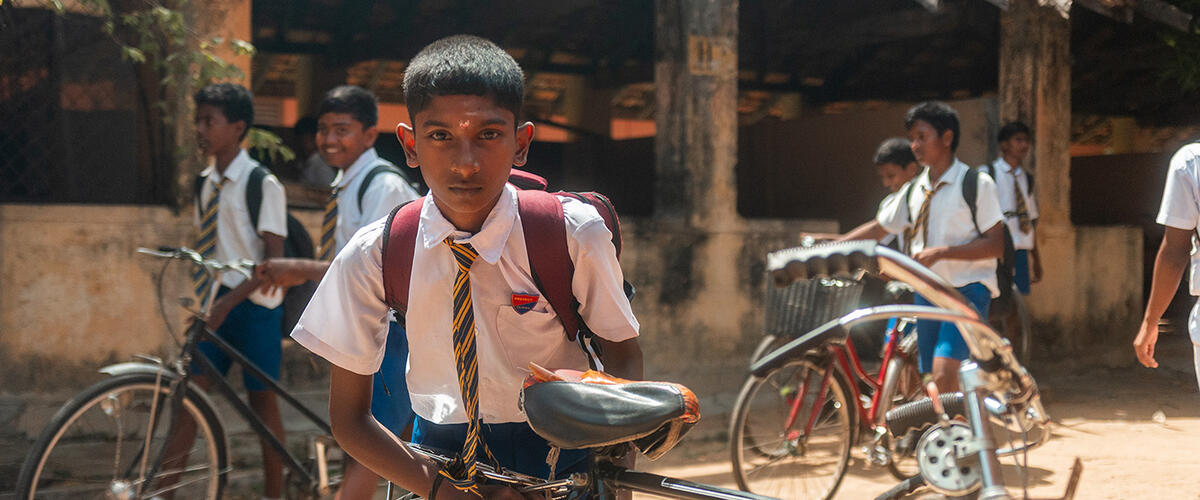
A Wish for the Next Generation
My hope is that our students will grow up to be emotionally healthy, self-confident, and compassionate individuals who are self-aware and treat others with respect.
It’s a statement that captures what this is really about: not protecting children from every crisis—no one can do that—but equipping them with the inner strength to face it with open eyes and find their own way through it.
But how is that supposed to work? The challenges vary. In Lebanon, children grow up amid war and economic uncertainty. In Sri Lanka, poverty and drugs weigh heavily on the lives of many young people. Screens and social media also play a role in both countries.
That’s why children and adolescents need reliable adults who can show them how to cope with pressure—people who lead by example, demonstrating that effort pays off, that relationships provide support, and that peaceful coexistence is possible.
Beirut: Where Looking Around Becomes a Challenge
At Nayla Daoun’s school, this has long since become a daily task. In the thirty years she has been leading the school, a lot has changed. The noise level during recess has risen; children get loud more quickly and clash with one another more often. Some students need the first two hours of the morning just to settle in. She observes more restlessness, impatience, inappropriate language, and behavior that can quickly come across as aggressive, along with a different kind of accident in the schoolyard, including more serious injuries.
“The most recent war was exceptionally stressful,” she says, “because it was so difficult to understand, predict, and plan for.”
Economic collapse, the 2020 explosion at the Port of Beirut, displacement, and a conflict that escalated again in the spring of 2026: crises have been piling up for years. In many families, grief over the loss of loved ones adds to the burden.
Nayla Daoun also sees the influence of virtual worlds. There, characters fall, fight, get hurt—and simply carry on. “In real life,” she says, “actions, on the other hand, have consequences.”
Some children have to relearn this difference. To do so, they need an environment that teaches boundaries while also providing a sense of security.
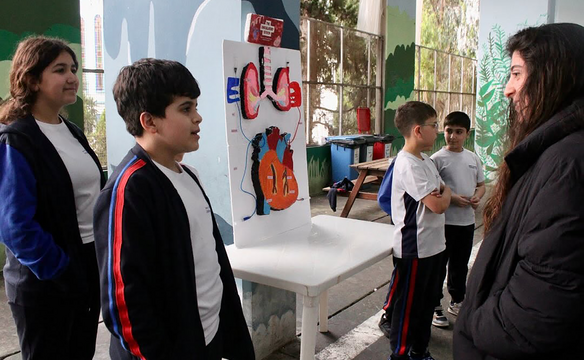
Sometimes a conversation is more important than any lesson: For many children in Lebanon, having a space to talk is just as important as the school curriculum itself
Recognizing Mental Stress Before It Becomes Chronic
A child is often unable to put into words what is troubling them. They lack the vocabulary and the ability to make sense of their own feelings. Stress can then manifest itself in ways such as irritability, withdrawal, or sleep disturbances.
This is explained by Maroun Bou Najm, who leads the humedica project to support teachers, caregivers, and parents at the Lebanese partner organization IDRAAC.
Adults can easily misinterpret such signals as disobedience. Yet there may be distress behind them—with consequences for a child’s concentration, academic performance, and relationships.
“Children between the ages of nine and twelve rarely understand political or economic realities to the same extent that adults do, but they still sense the fear and uncertainty in their environment,” says Bou Najm.
That is why the project brings together two perspectives: Teachers experience a child within the structured daily school routine. Parents know the child from the family environment. Together, they can better understand what the child needs and where support should be provided early on.
A healthy future is one in which children grow up in an environment where they feel safe and supported, are full of hope, and can reach their full potential.
Together with its partner organization IDRAAC, humedica supports schools in providing children with a sense of security and support:
- Early detection of mental health issues: Teachers and parents learn to recognize signs of stress, anxiety, and other mental health challenges.
- Empowering children: Children are supported in understanding their feelings, developing self-confidence, and overcoming challenges.
- Making school a safe space: Play, physical activity, social relationships, and open conversations foster a supportive environment.
- Providing Individualized Support: Children with special needs receive targeted support.
Jaffna: Guidance Instead of Temptation
About 6,000 kilometers further east, one morning, some 200 students are seated in the auditorium of Jaffna Central College. Standing before them are staff members from humedica Lanka and local experts.
The focus is on drugs, peer pressure, and recognizing warning signs in themselves and their friends.
Sri Lanka is tackling the growing drug use among young people through initiatives such as the nationwide “One Mission, One Country” campaign. But education requires people who bring it to life in everyday situations—people who show why it’s worth staying in school, nurturing friendships, and working on oneself.
Thevarasa Premarajah has been working in drug prevention for about twenty years. He facilitates workshops organized by humedica Lanka and its partner organization, Healthy Lanka, at schools in Jaffna.
For him, focusing solely on drug use does not go far enough. How closely young people are connected to their families is also crucial. Without this support, outside influences can become stronger.
His advice to parents is simple yet challenging: warmth, closeness, and truly listening—as a source of ongoing support. Teachers, too, can serve as these reliable support figures.
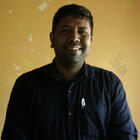
Teaching with genuine warmth, staying close to the students, understanding their entire family situation, and teaching based on that understanding—in my personal opinion, that is what is needed right now.
When Teens Become Role Models Themselves
A single presentation can be a start. However, Premarajah wants to achieve more: Young people should become ambassadors themselves and pass on what they’ve learned.
“When they get a sense of what a happy life without substances could look like, they’ll strive for that.”
This is where the GRACE project comes in. The name stands for Growth, Responsibility, Awareness, Care, and Empowerment.
humedica supports young people in recognizing risks early on and making responsible decisions. Teachers are trained to identify at-risk young people and provide them with targeted support.
The project includes building self-confidence and resilience, as well as providing education about drug use, social media, and other risky influences. In this context, resilience means being able to cope with stress and difficult situations.
Students are encouraged to take responsibility and support their classmates. Dedicated points of contact at the schools provide them with guidance. The goal is to embed prevention in everyday school life over the long term.

From Listeners to Ambassadors: Young People Who Share What They've Learned
The Cell Phone: A Connection to the World and a Constant Distraction
Kavin* explains how early habits form. Even as a toddler, his mother would feed him while holding a cell phone. “Otherwise, I wouldn’t eat.”
Later, scrolling through his phone at night became part of his daily routine. He says his grades suffered. Before exams, he finally stopped on his own: “I promised my mom I would.”
Nila* initially remembers a different side of the cell phone. During the pandemic, it was the only way for her and her classmates to stay connected to their classes. Without this option, many would have fallen behind in school.
But she also saw how this helpful tool could turn into a constant distraction. Nila recounts that one classmate nearly achieved a perfect score during the pandemic. After returning from online classes, her grades dropped significantly. At the same time, she became easily irritable. Eventually, her mother took her cell phone away.
The experiences of these young people show how closely opportunities and challenges in digital media are intertwined. This makes it all the more important for adults to set a good example by using technology mindfully and to remain available for conversation.
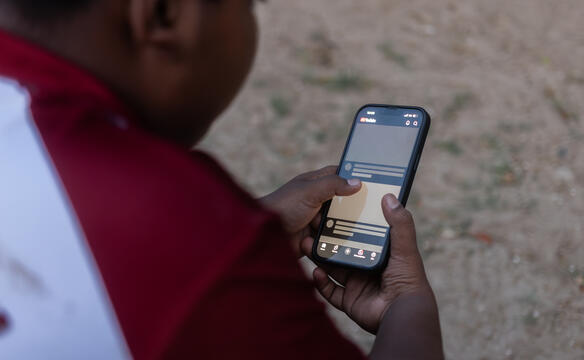
Digital media are part of everyday life. Children need adults who set an example of responsible use.
With the GRACE Project integrates humedica’s prevention efforts into everyday school life:
- Training teachers: They learn to identify at-risk youth early on and provide them with targeted support.
- Educating about risks: Young people explore drug use, peer pressure, and the risks of social media.
- Building self-confidence: Young people are empowered to cope with stress and make responsible decisions.
- Strengthening role models and support networks: Students learn to support others. Reliable support people at schools provide guidance.
For us, too, change begins with awareness
How can we help young people believe in a future worth striving for?
This question arises in Germany as well. Living conditions are different, but even here, young people feel the need to withdraw from a confusing world. A recent study by the health insurance provider DAK and the University Medical Center Hamburg-Eppendorf shows that more than a quarter of 10- to 17-year-olds in Germany exhibit risky or already pathological media consumption. The proportion with risky use has roughly tripled since 2019.
What can help them is essentially the same: adults who pay attention. Adults who can tolerate the tension, listen, and make an effort to understand. Who trust their children to handle things and support them.
Sometimes it starts small: with a cell phone set aside for a conversation. With time that isn’t just leftover but is consciously set aside for one another.
Children who experience this kind of attention can themselves become the role models that the next generation needs.
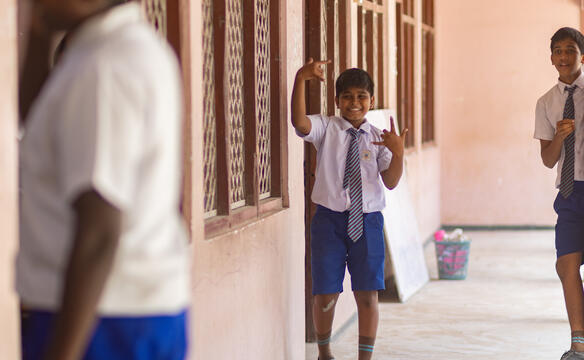
Confidence Instead of Withdrawal: humedica empowers young people to find their own path and take on responsibility.
What Brings Us Together: Ambassadors for a Better Future
A classroom in Beirut, a school auditorium in Jaffna, a child’s bedroom in Germany—the causes of their uncertainty could hardly be more different. And yet, a common thread runs through all three: children who are expected to shape a future for which no one has given them a script. That is precisely why they need adults who believe in them—who trust that today’s uncertainty can become tomorrow’s strength.
“It means helping children become future ambassadors of peace,” says Maroun Bou Najm, “young people who are emotionally healthy, compassionate, and resilient—and capable of building a better Lebanon. Every generation should have the opportunity to learn from the previous one and shape a more peaceful future for the next.”
With your donation, you help ensure that humedica remains present where children and young people need reliable adults—in Lebanon, in Sri Lanka, and everywhere else where the future begins today.
*Names have been changed