Country information: Sudan
- Capital: Khartoum
- Official language: Arabic and English
- Population: 50.5 million (2024)
- Currency: Sudanese pound
A big chair does not a king make.
Sudanese proverb
(Meaning: More appearance than reality.)
Kings not only play a role in this Sudanese proverb, but also in the history of the country. The Kingdom of Kush, an important advanced civilization, emerged early on in what is now Sudan. This was later followed by the Sultanate of Sannar, during which time Islam spread.
After a period of British-Egyptian colonial rule, Sudan gained independence in 1956. In the following decades, however, political development was characterized by instability and dictatorships.
Sudan in pictures
-
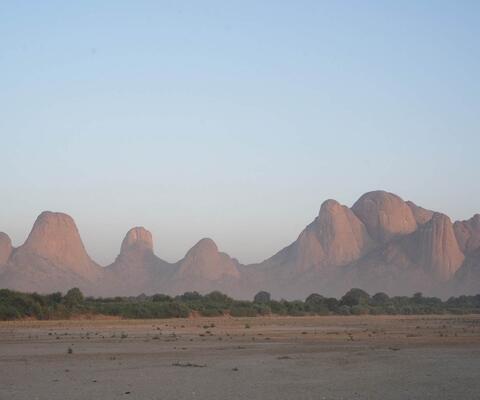
The Taka Mountains in eastern Sudan near the city of Kassala are a striking range of granite rocks.
-
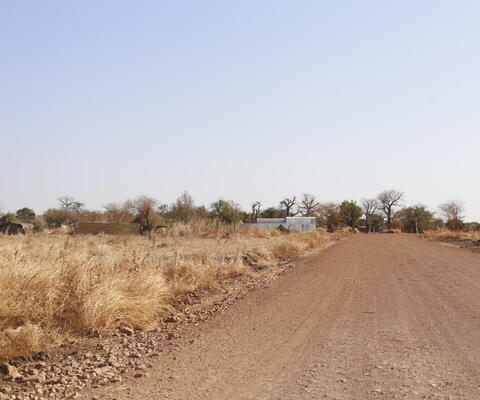
Sudan is predominantly dry and is dominated by vast desert and savannah landscapes.
-
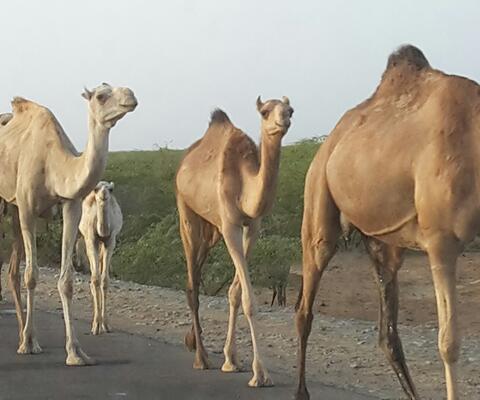
In vielen Teilen des Sudans prägen Kamele das Landschaftsbild.
-
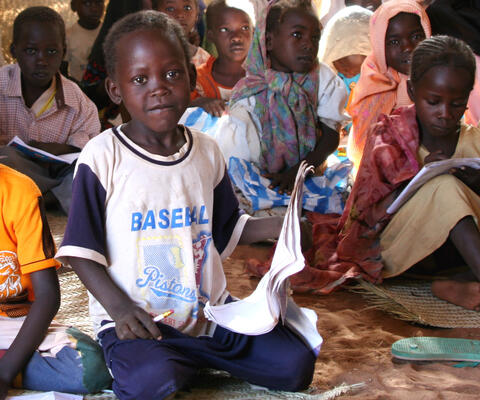
Significantly more children attend school in urban areas such as the capital Khartoum than in remote rural regions. However, most educational institutions such as schools and universities have been closed since the outbreak of the war. Many children and young adults are denied access to education.
-
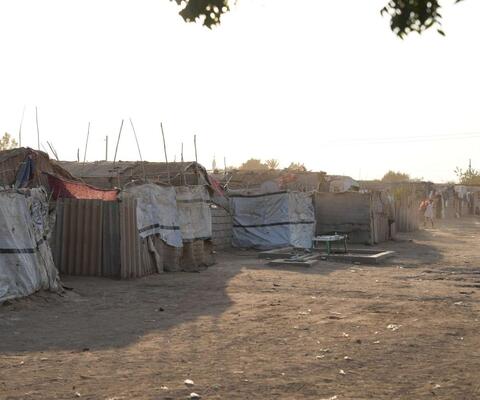
The dwellings in refugee camps or temporary settlements are mostly made of corrugated iron and other available materials.
-
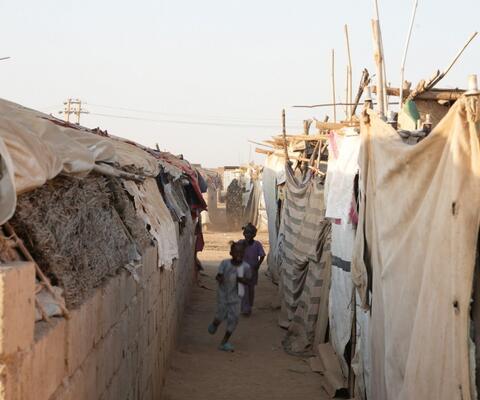
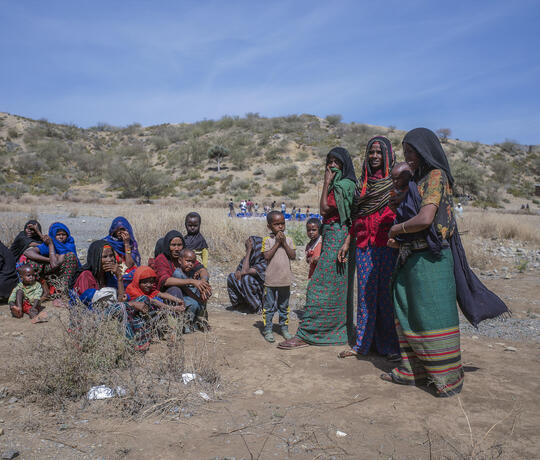
Many Sudanese children grow up in makeshift settlements. Moments of playing together give them a bit of normality in their everyday lives.
-
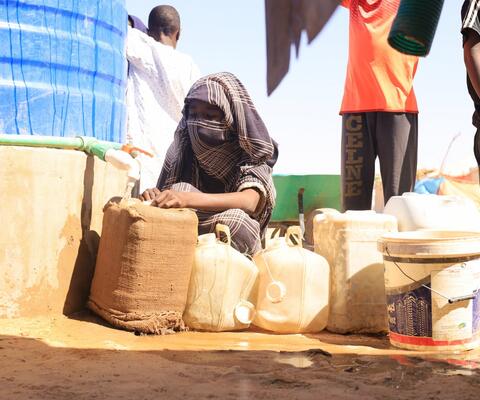
Access to clean water is severely restricted for many people in Sudan. humedica supports displaced people on the ground by providing drinking water.
Population, land and living conditions
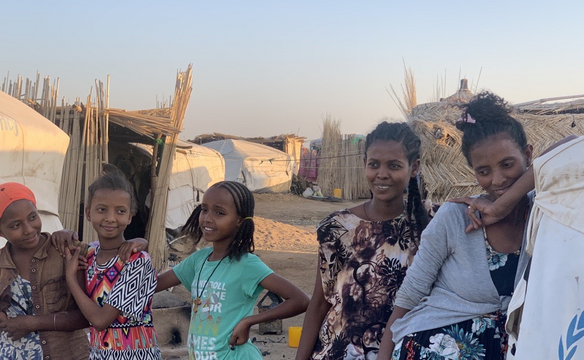
Geographical location
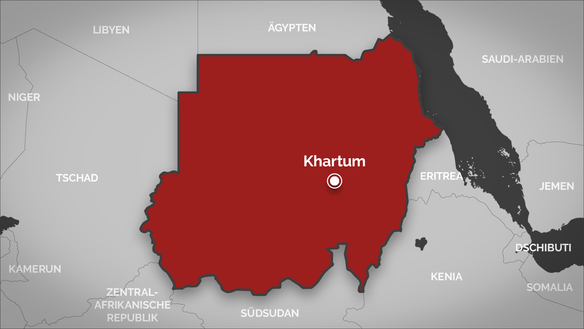
Sudan is located in north-east Africa and is one of the largest countries on the continent. The most important lifeline is the Nile, along whose course fertile regions develop.
Away from this, the country is characterized by vast desert landscapes: the Sahara extends to the north, merging into the Sahel zone in the south. The Darfur Mountains, with the highest mountain, Jebel Marra, rise in the west of the country. The centrally located capital Khartoum was once the political and economic center of the country - before it was destroyed by the war that has been raging since 2023.
Did you know that Khartoum translates as elephant's trunk? The city lies at the confluence of the White and Blue Nile and this shape is reminiscent of an elephant's trunk.
Various ethnic groups and communities
Sudan is a multi-ethnic state with hundreds of different population groups. In addition to the official languages of Arabic and English, numerous other languages are spoken.
Humanitarian situation
War, famine and displacement
Violence has been escalating in Sudan since April 2023 and civil war is raging. The battle for supremacy between the Sudanese armed forces and the paramilitary group Rapid Support Forces (RSF) has led to extreme insecurity among the population. Serious human rights violations, including attacks on residential areas, abductions and sexualized violence, have occurred time and again.
Millions of people have since been displaced and forced to leave their homes. Many are living in difficult conditions in temporary camps or have sought refuge in neighboring countries. However, the refugee camps are overcrowded in many places.
The consequences are dramatic:
- Food is scarce or unaffordable
- Hunger and malnutrition are on the rise
- Drinking water is barely available
The situation in Sudan is one of the biggest humanitarian crises in the world today: the country has one of the highest numbers of displaced people and half of the population is severely affected by acute food insecurity.
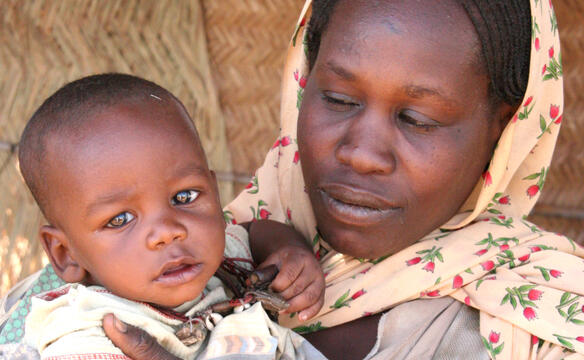
Women and children particularly at risk
Women and children suffer particularly from the effects of war. They are exposed to violence, exploitation and constant insecurity.
Children often have no access to education and grow up in an environment with no prospects. Malnutrition and disease endanger their development and survival.
Health and medical care
The healthcare system has largely collapsed. Numerous hospitals were destroyed by the war or had to close. The few facilities that are still functioning are overloaded and have hardly any medicines, medical staff or equipment.
The water supply is also not guaranteed in many places. People have no access to clean water and sanitary facilities. The consequences are serious: diseases such as cholera, measles, malaria and diarrhea are spreading rapidly.
This situation is particularly dangerous for children, as their immune systems are further weakened by malnutrition.
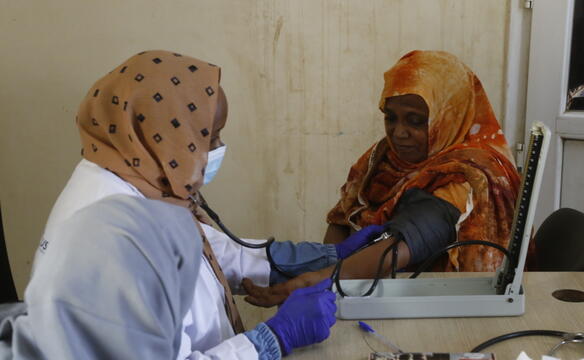
humedica supports refugees in Sudan with basic medical care.
More about Sudan and humedica
In the south-east of the country and the surrounding regions, humedica provides medical support: in addition to covering treatment costs, we equip clinics with medicines and the necessary materials and train local medical staff. We also provide refugees with food and clean drinking water. Find out more about our aid in Sudan.