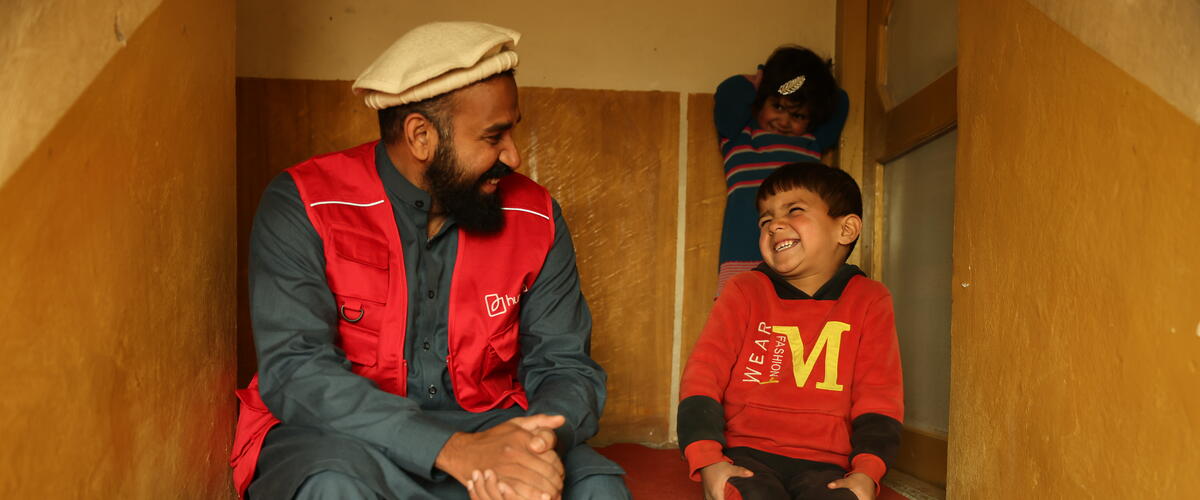
Ein Mann mit roter humedica-Weste und ein Junge sitzen auf einer Treppe und lachen
More than 41 million people live in Afghanistan. Even before the Taliban took power, many were affected by poverty, displacement, and a lack of access to medical care. humedica supports the population with medical services and health education – both through health facilities and community-based approaches that reach people in remote areas.
Video-Datei
Autor
humedica
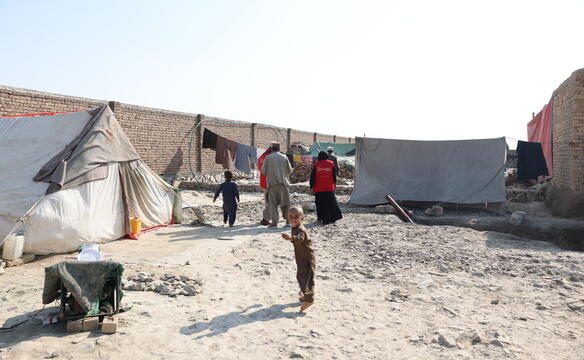
In einer Flüchtlingssiedlung sind Zelte zu sehen, dazwischen eine Gruppe Menschen und ein Kind, das in die Kamera schaut

Current situation in Afghanistan

Healthcare in Afghanistan has been in a catastrophic state since long before the Taliban seized power in August 2021. There is a shortage of doctors, trained medical staff and equipment in many health centres. The economic situation has worsened since 2021: international sanctions, job losses and lack of income are driving more and more families into existential hardship.

At the same time, the country has been suffering from severe droughts for years. Harvests are failing and food prices are rising sharply. At least one in three people in Afghanistan is affected by hunger. For many families, medical treatment and medication have become unaffordable. Often, simply getting to the nearest health facility is a major hurdle – especially for older people, people with disabilities, pregnant women or families without transport.

Added to this is a lack of knowledge about clinical pictures, treatment options and preventive measures. Especially in remote regions, many people lack information about hygiene, prenatal care and the prevention of communicable diseases. As a result, diseases often remain undiagnosed or untreated – especially among women, children, internally displaced persons and returnees.
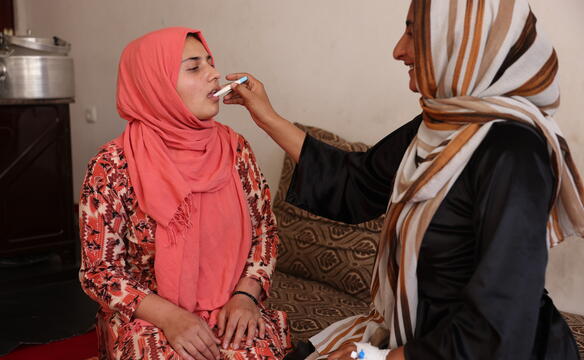
 

Eine Frau misst einer anderen mit einem Fieberthermometer im Mund die Temperatur

How does humedica help?

humedica helps everyone in the Kabul region – women and men, old and young alike. Special attention is given to those who are particularly vulnerable and therefore most in need of help. These are usually women and children, many of whom are refugees who have been forced to leave their homes.
Supporting a basic health clinic to improve access to medical care and provide basic healthcare in the surrounding communities
Outpatient treatment and comprehensive mother-child care, including pre- and post-natal care during and after pregnancy
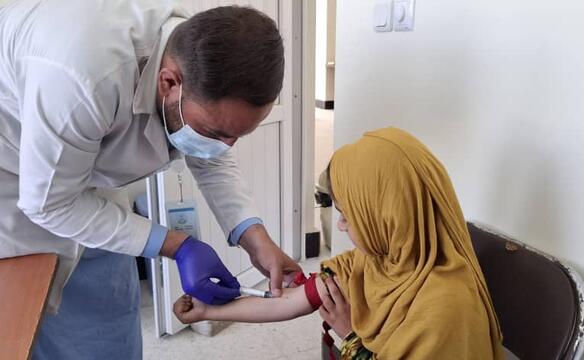
Carrying out vaccinations, health checks, first aid and treatment of common illnesses, and providing necessary medication
Referral of patients to health centres in larger towns, especially for further treatment, specialised diagnostics, and pregnancy and postnatal care
Conducting laboratory tests and basic diagnostics for the early detection and treatment of diseases
Providing health education in communities, e.g. on hygiene, disease prevention, vaccinations, healthy lifestyles, and the prevention and early detection of diseases
Ongoing training and support for local health workers so that they can provide basic health care, counselling and first aid directly in their communities
Strengthening communities through health services and information events to improve access to medical care
Ein Arzt impft ein Kind

How you can help:

With 30 euros, you can enable laboratory tests for forty patients.
With 225 euros, a midwife can work for one month.
For 155 euros, vaccinations for children can be provided for one month in the clinic.
With 2,775 euros, you can finance medication, laboratory tests and bandages for one month.

Projektpartner