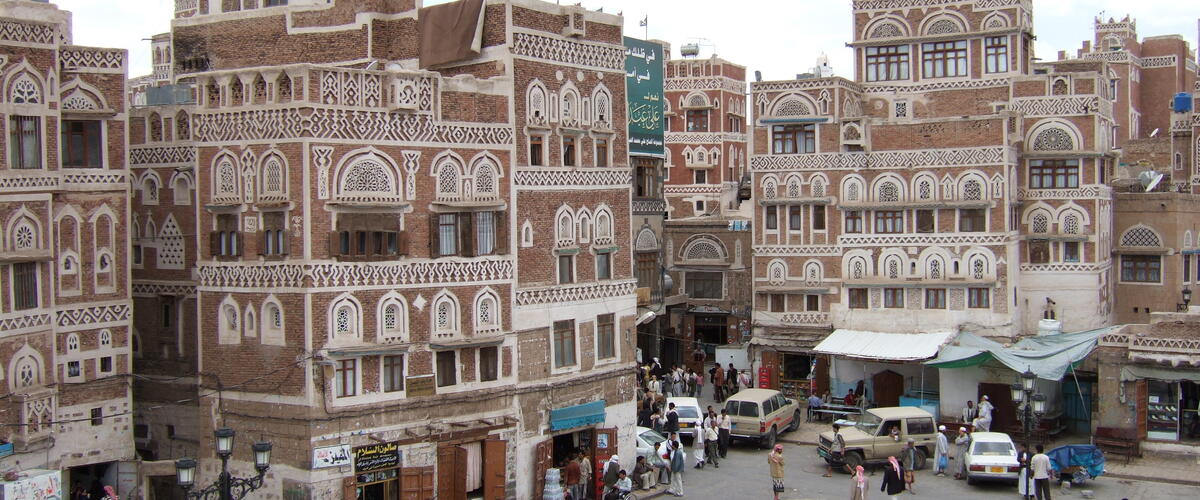
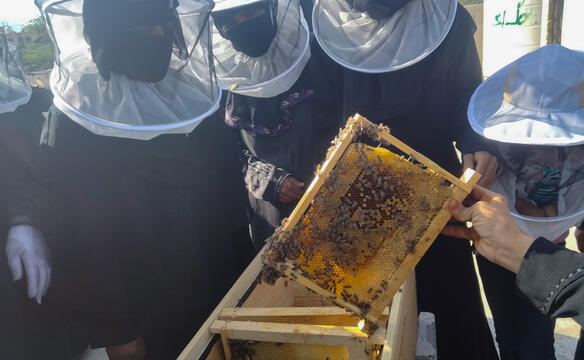
Maryam and the other women learn how to create better prospects for their families with beekeeping.
One of these women is Maryam*. The 21-year-old lives with her three children in a remote region - four hours away from the nearest town. Her husband used to work in the public sector. But at some point the state stopped paying him. He only found a new job far away in another region. Maryam couldn't afford to come with him, so she stayed and has had to earn a considerable amount of money to support herself and her children ever since.
War and geography Causes of poverty
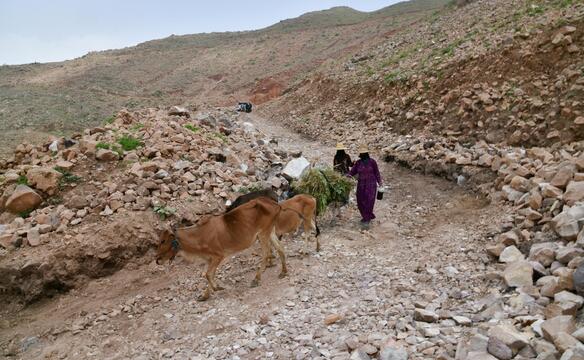
People in Yemen have to make do with simple means, especially in rural areas.
Yemen is considered the poorest country in the Arabian Peninsula. The economy is in ruins. Jobs are scarce throughout the country. The situation is particularly bad in rural areas. Over 80 percent of Yemenis live in poverty, most of them in rural areas.
"Apart from the war, the main reason for the desolate economic situation is the geographical conditions," reports Paula Weik. As project manager at humedica, she is responsible for Yemen and knows: "There is too little water and little land on which anything can be grown. At the same time, long periods of drought and war threaten the harvest of millet, sorghum, maize and vegetables." Yemen is dependent on food imports. Their prices are constantly rising. The majority of the population can therefore not afford to buy food, including Maryam.
Around 38 percent of Yemenis suffer from hunger. "The proportion of hungry people in Yemen is therefore higher than in almost any other country," says Weik. Maryam wanted to take countermeasures and avoid hunger for herself and her children. "I want to put more variety on the table and be able to send my children to school," she says. "They'll soon be old enough for that. I want them to have a better future."
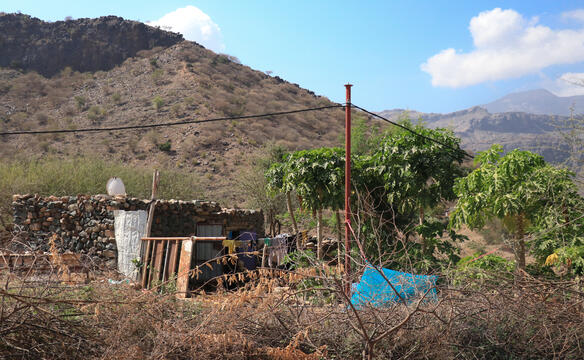
The house of Maryam
Learning to beekeep to earn a living
So she thought about what she could do and came across an offer that is co-financed by humedica thanks to donations from Germany. Together with other women, Maryam learned how to beekeep and then received the necessary equipment - and four beehives. These now stand under trees in the immediate vicinity of her house. "I sell honey and other bee products," says Maryam. This earns her enough money to buy food for her family. "I want to invest what's left over in more beehives and thus ensure that my family has an income in the long term that we can live on and pay for treatment for my son, who has a disability," she explains.
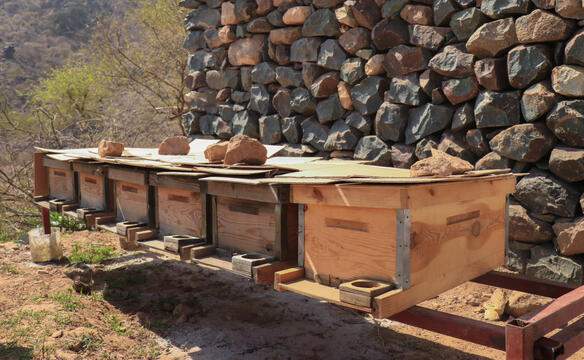
Maryam's beehives
"The situation of women in Yemen is complex," says humedica project manager Paula Weik: "On the one hand, women play a key role in society, even against the backdrop of war. On the other hand, they are sometimes severely restricted in their rights and mobility in the very traditional patriarchal society. They need their husband's consent to work and must be accompanied by a male family member to travel or even leave the house." Many girls drop out of school early. There is no money to invest in girls' education or they are married off far too early. This limits their opportunities to free themselves from dependencies or earn their own money.
Samira learns to sew
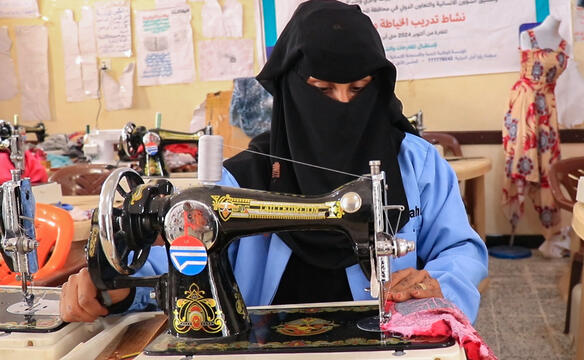
Another woman who has to fight for her opportunities is Samira*. After divorcing her husband, the 37-year-old is solely responsible for supporting herself and her three children. They are between two and seven years old. She also has to support her parents, as her father is unable to work and earn money due to a physical disability. "In Yemen, there is no social safety net to cover basic needs like there is in Germany," says Weik, explaining the situation. Samira and her family of six live in a single room with an outdoor bathroom. They also have to cook outside.
For a long time, Samira collected and sold firewood. The work was hard - the journey into the woods was long. The proceeds from the sales allowed her to feed her family. "When things went well, I was even able to put something aside," she reports proudly, adding: "At some point, it was enough to buy my own livestock." This made the family's situation much easier. Samira sold milk and other products and stabilized the family's income - quite a feat. At some point, she discovered an offer from a local aid organization supported by humedica, which aims to enable women to improve their income. She signed up and learned to sew together with other women. "After the course, all the women also received a sewing machine. So I was quickly able to sew and sell clothes," she reports. Now she has another source of income and is independent of farming. And she is incredibly grateful. Because without the donations from Germany, her life - and that of her family - might have taken a completely different direction.
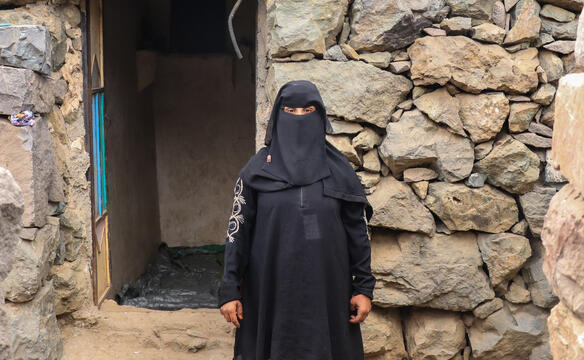
Samira in front of her house
*Names changed