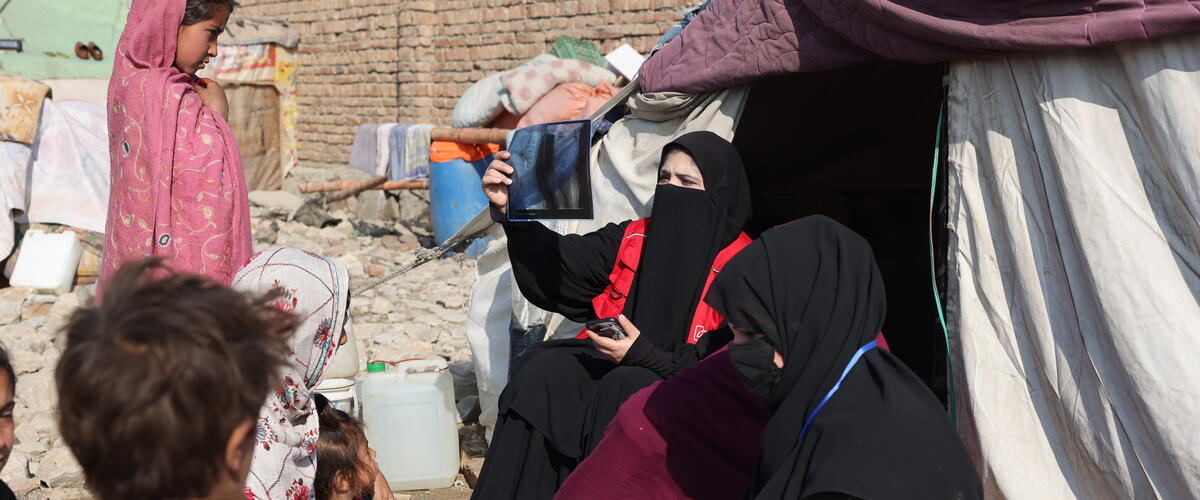
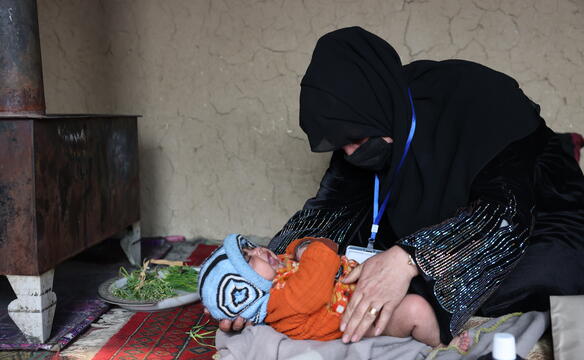
Shukurya takes a close look at the baby. How much does it weigh? What is the circumference of its arms? What is the condition of its skin?
She also examines the mother carefully. Is her blood pressure normal? The woman gave birth to her child just a few weeks ago. Today, Shukurya is visiting her for a postnatal checkup.
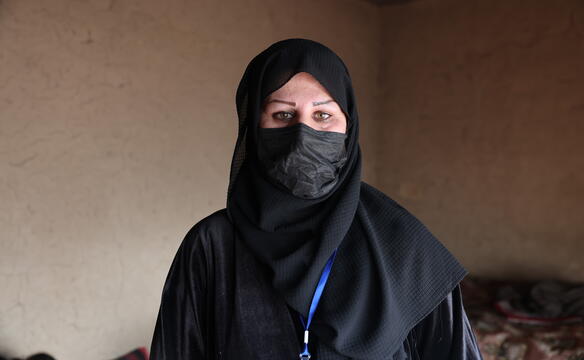
Shukurya actually works as a teacher at an elementary school. But through humedica, she has also been trained as a health worker for her village. In this role, she takes on a task that is particularly important for many families in her village.
Without Shukurya, there would be no one here to visit mothers after childbirth – and no direct point of contact for many everyday health questions.
More than an hour to the nearest health clinic
Shukurya lives in a village just outside Kabul. It takes more than an hour to reach the nearest health clinic from here.
For many families, just getting there is a major hurdle. The people in the village are poor. Many cannot afford a taxi or other means of transportation.
However, a lack of medical care can have serious consequences, especially for pregnant women, new mothers, and newborns. That is why the work of community health workers begins right where people live.
They support women during pregnancy and after childbirth, monitor the health of newborns, and help identify illnesses and health risks early on.
First Points of Contact Right in the Village
In total, humedica has 50 health workers. One woman and one man are responsible for each location.
They are the first point of contact for people when health issues arise. At the same time, they know the limits of what they can do: If they detect signs of a serious illness or an increased health risk, they encourage those affected to seek medical attention at a clinic.
Just how important this is becomes clear during Shukuryas’ visit to a refugee camp far outside her village.
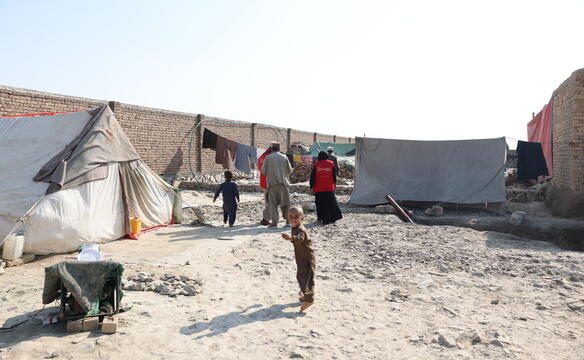
In a desert-like wasteland, Afghans who were forcibly expelled from Pakistan and have not yet found a new home in their homeland live there. They are exposed to the elements. They have no access to clean drinking water.
During her visit, Shukurya takes a close look. She notices that the children are malnourished. Two pregnant women also show signs of anemia.
Shukurya advises them to visit a clinic. The two women promise her they will go there to reduce the risk of complications.
It is this closeness to the people that characterizes the work of the health workers. They are present in the villages and camps, know the people, and can identify health problems before valuable time is potentially lost.
Health care where people live
Not every crisis begins suddenly with a natural disaster. In Afghanistan, poverty and a lack of medical care are part of everyday life for many families. Pregnant women, young mothers, and children, in particular, depend on support.
People like Shukurya help ensure that healthcare reaches even those for whom a health clinic is far away or difficult to reach.
Support is needed so this work can continue. Donations help ensure that Shukurya and other health workers can be there for the local people.