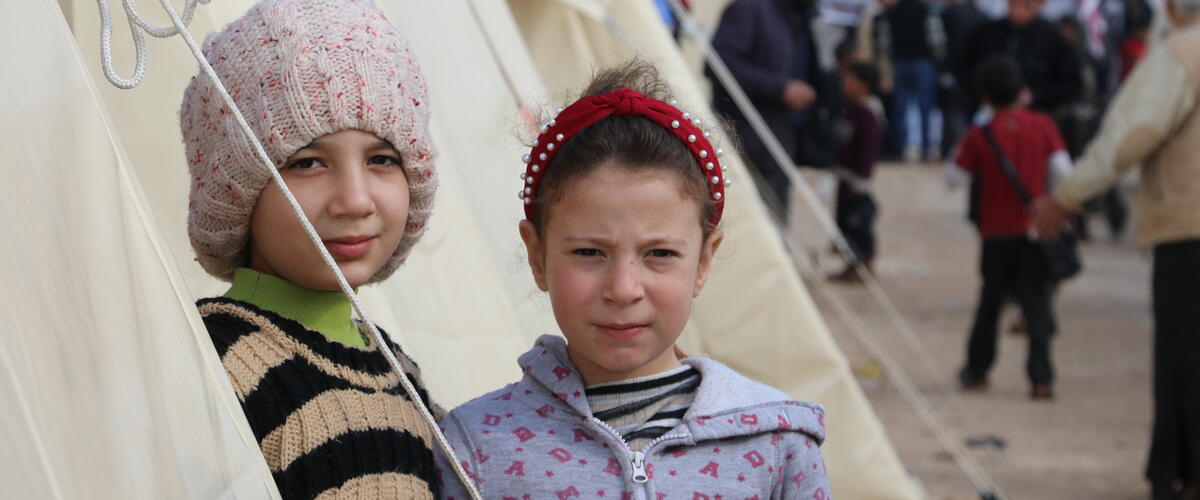
Zwei Mädchen stehen vor einem Zelt in einem Geflüchtetencamp in Syrien
After years of war, displacement and a devastating earthquake, much of Syria still lies in ruins. humedica is supporting the people in their reconstruction efforts – with a particular focus on medical care. Together with local partners, we are helping to stabilise healthcare systems, strengthen the capacity of healthcare professionals and ensure long-term access to medical care.
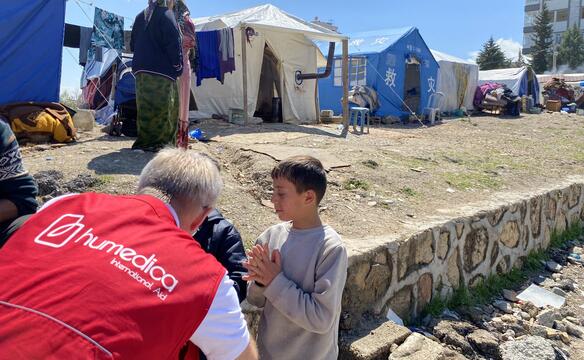
humedica Einsatzkraft unterhält sich mit zwei Jungen, im Hintergrund ist das Zeltlager zu sehen, das als Notunterkunft nach dem Erdbeben dient.

Current situation in Syria

The humanitarian situation in Syria remains critical. Following the fall of the Assad regime in December 2024, many refugees are returning to their homeland – to a place where infrastructure has been destroyed over many years. Hospitals, roads and supply systems are barely functional in many areas.

More than 16.7 million people are in need of aid, which is approximately two-thirds of the population. There is a shortage of medical staff, medicines and functioning healthcare facilities. Many clinics are currently run by aid organisations, but some facilities have already had to close due to declining international support.

Right now, it is crucial to maintain medical care – whilst at the same time laying the foundations to ensure that it can once again be supported by state structures in the future.
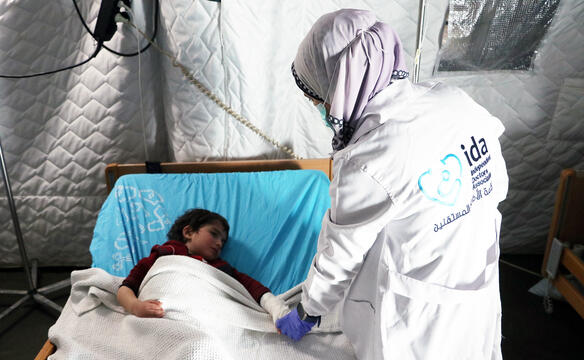
Eine Medizinerin steht neben einem Mädchen im Krankenbett

How humedica helps

Together with its local partners, humedica is committed to strengthening healthcare provision in Syria in the long term:
 

Training and further education for healthcare professionals, particularly in the under-represented fields of paediatrics, internal medicine and gynaecology, to ensure that well-trained medical staff are working locally in the long term
Equipping health centres with urgently needed supplies
Comprehensive care for people with disabilities, including prostheses, walking aids, hearing aids and glasses
Distribution of medicines
Processes and treatments in healthcare facilities are improved so that patients receive consistently high-quality care
Improved infrastructure and access to medical treatment, particularly for disadvantaged people, regardless of their financial situation
Close cooperation with existing state structures: health centres are prepared for long-term reintegration into the public healthcare system
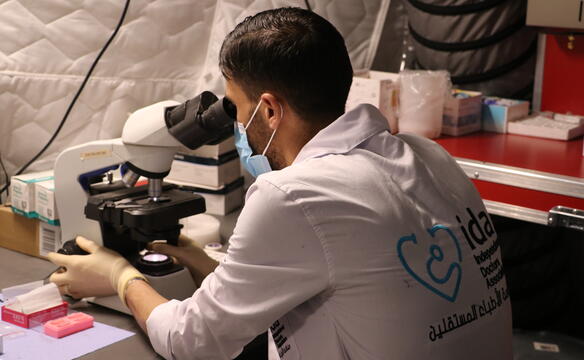
A man looks through a microscope

Doctor under the microscope - Training and medical equipment for sustainable aid (Syria)

How you can help

With 350 euros, an assistant doctor can work for a month and come closer to completing their specialist training.