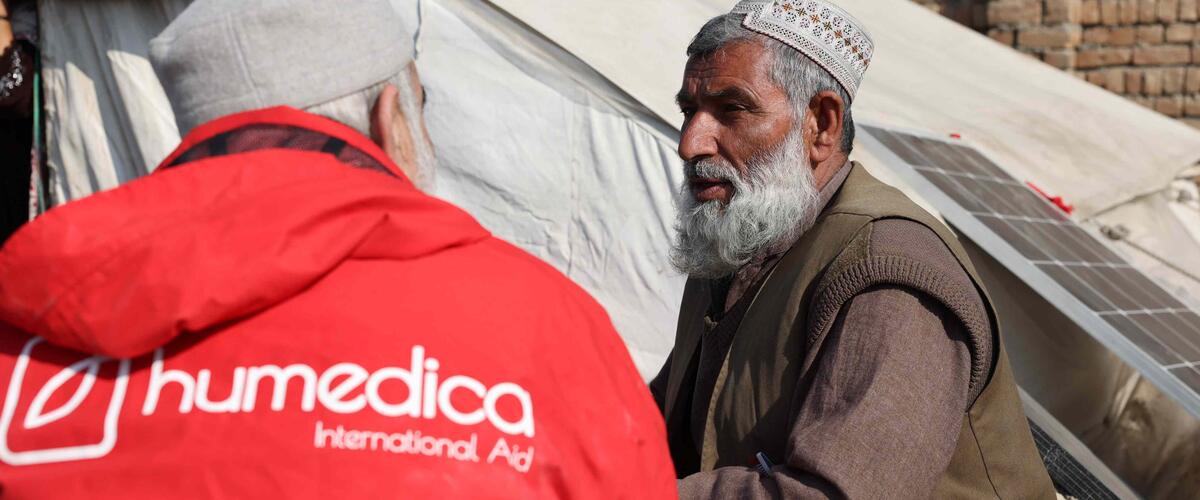
When Helpers Themselves Become Victims
The number of people worldwide who depend on humanitarian aid is rising steadily: In wars such as the one in Ukraine, or in displacement crises such as in Sudan or in disasters such as the earthquake in Venezuela. Humanitarian aid workers are on the ground there. But they, too, are increasingly finding themselves in danger.
In 2025 alone, 350 humanitarian aid workers were killed worldwide. Another 322 were injured, 235 were kidnapped, and 280 were detained. In total, this means that 1,187 aid workers were affected by attacks, injuries, kidnappings, or other security incidents.
These are alarming figures. And these are people who are dedicated to caring for others and assisting them in acute emergencies. People whose work is only possible if their own safety is also protected.

Humanitarian aid requires safe conditions
Humanitarian workers risk their lives every day in crises and conflicts. They stay when help is urgently needed. And they deserve protection.
Humanitarian workers are not targets. They need safety so they can do their work and help people in need.
Helping Safely: How humedica Protects Its Employees
We, too, are constantly working to prepare our staff as best as possible for assignments in disaster- and crisis-stricken regions. This includes safety training, country-specific training, and an assessment of the security situation in the respective project and assignment countries.
On the ground, we also maintain close communication with our partner organizations and other aid agencies. In particularly tense situations, we monitor the situation closely: in Ukraine, for example, through a permanently assigned security manager.
To learn how we organize security and why responsible aid requires thorough preparation, read the interview with our security manager Michael Cetta.
World Humanitarian Day was established by the United Nations General Assembly and is observed annually on August 19. It draws attention to the work of people who support others around the world during crises, conflicts, and in the aftermath of disasters. At the same time, it highlights the dangers humanitarian workers face in their work.
Humanitarian aid workers provide care for the injured, distribute food and drinking water, and offer medical assistance to people in crises and in the aftermath of disasters, among other things.