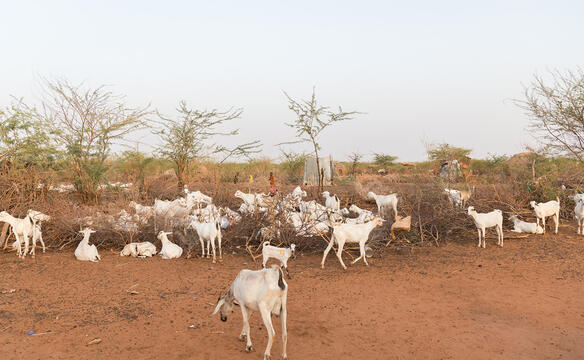
Climate change is leaving visible traces - many animals can no longer find enough food
The Somali region in Ethiopia, far away from the capital Addis Ababa, is home to pastoralists and semi-nomads. Due to its geographical remoteness, it is one of the least developed areas in the country. However, life here is becoming increasingly difficult due to climate change. The population, which has traditionally lived from agriculture and mobile livestock farming for years, is increasingly confronted with extreme weather conditions such as drought and flooding. These lead to crop failures and widespread malnutrition. Diseases are spreading rapidly and claiming many lives.
Between drought and flood
Ayana* lives with her husband and five children in the village of Bardaely in the Somali region. She runs a small kiosk to feed her family. Her family used to be able to make a living from farming, but the lack of rain and increasingly frequent dry seasons have changed everything. It is now increasingly hot for long periods of time. The river that once supplied her village with water has dried up for the third time in a year. Ayana's husband had to give up farming as a result. The drought turned his fields to dust. Like him, many farmers do not know if and when it will rain next time. They can no longer grow anything and their animals are dying.
When it does rain, it rains so heavily that the parched soil cannot absorb the masses of water. The result is devastating flooding. This interplay between drought and flood used to be predictable for residents, but climate change has made the intervals unpredictable and the weather events more extreme.
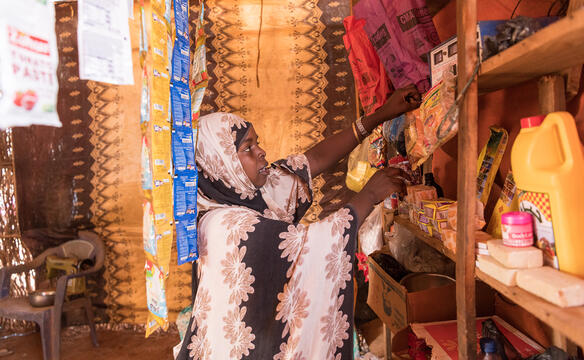
Ayana runs her own small kiosk to provide for herself and her family
Flight, water shortages and hunger as a result
Many of the families who lost their livelihoods in agriculture had no choice but to flee - including Asha's* family, who were displaced by the drought and had to settle elsewhere. "I lost all my camels, goats and cattle. Our livelihood was animal husbandry - my children drank the milk and I sold some of it to traders to cover the costs of health and school," she says wistfully. "Now we have nothing and we can't go back to our village either," she adds. Asha now lives with her family in a refugee camp. But even here, life is difficult. They don't have enough to eat and they have to walk an hour and a half to the nearest water source.
"I lost all my camels, goats and cattle. Our livelihood was animal husbandry - my children drank the milk and I sold some of it to traders to cover the costs of health and school."
The difficult living conditions mean that diseases such as cholera and other infections spread quickly and cost many people their lives. Malnutrition is also widespread due to the lack of water and food. The situation is particularly life-threatening for children and pregnant or breastfeeding women. The figures are alarming: more than ten percent of all children die before their fifth birthday. The fear for their children and the daily struggle for survival are a bitter reality for most families.
Asha's children were also malnourished. Like many others affected, they received special food from humedica to help them regain their strength. Regular examinations for mothers and children enable malnutrition to be detected early on.
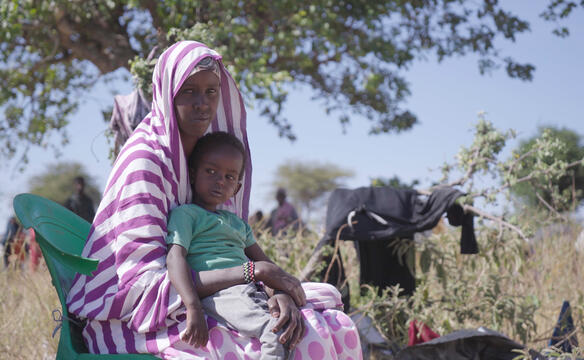
Asha and her child received help from humedica after they had to flee their home
Far away from medical care
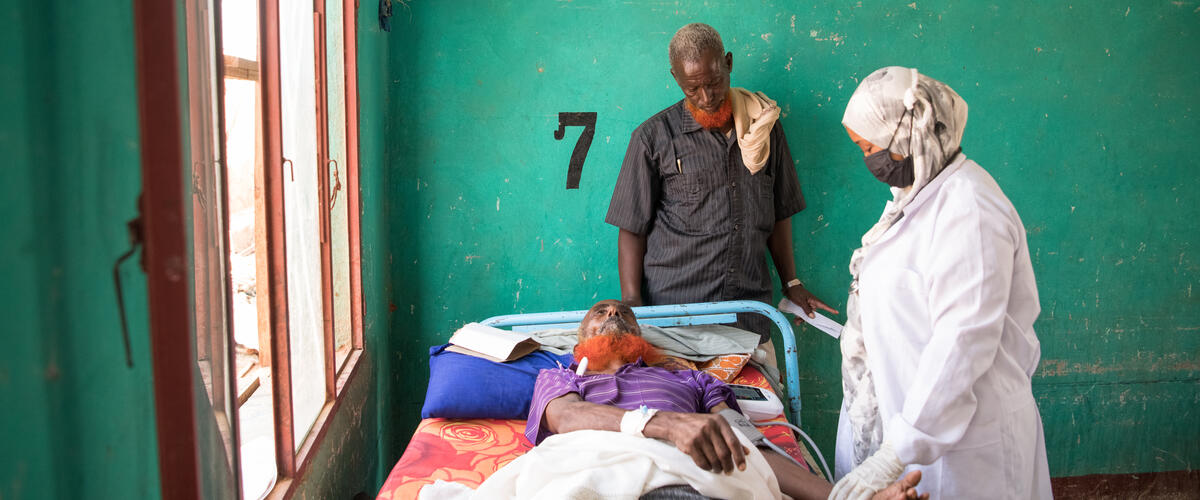
People in Somali are often left to their own devices when it comes to their health. Tafari* and his family are no exception. He stands anxiously by a hospital bed and looks after his 88-year-old sick relative Ibrahim*. They come from the village of Alen, far outside the town of Dollo, where Tafari lives with his wife and twelve children. "There is a pharmacy in our village, but no hospital," he says. If they are seriously ill, they have no choice but to take a shared cab for the five-hour journey on poor roads to the nearest hospital in the district of Dollo Ado. But the expensive fuel is an insurmountable hurdle for many, so they cannot afford the journey. Tafari remembers the difficult times thirty years ago, when there were no medical facilities at all in the entire area and people were often left to die helplessly.
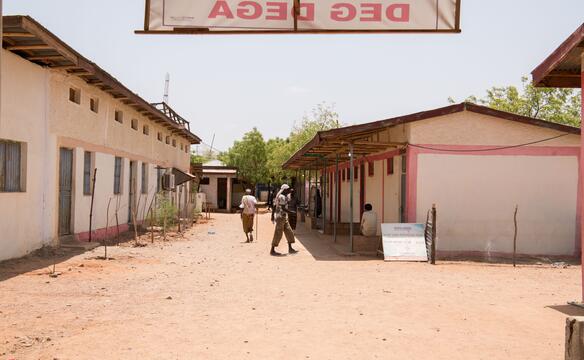
Even today, the already fragile healthcare system in the Somali region is reaching its limits. In addition to the 160,000 locals, around 168,000 people who have had to flee from neighboring Somalia also live here. The challenge is to guarantee everyone the same level of basic medical care. The region is a long way from the capital Addis Ababa and is therefore easily overlooked by the public healthcare system.
The nomadic lifestyle of the Somali people makes medical care considerably more difficult. Their constant movement from place to place often means that they are far away from the nearest medical facility. The Somali population covers an area almost the size of Germany, which means they have to travel for days on foot to reach a hospital. This vast expanse and sparse population make it difficult to establish and maintain a comprehensive healthcare system. In order to ensure healthcare for the population, humedica is helping the hard-to-reach region to build and strengthen its medical infrastructure.
humedica strengthens local health care
Humedica has been active in the Somali region for over ten years. It all started back then with medical care in a camp for Somali refugees who were forced to leave their homes due to food shortages and conflicts. Today, the aid focuses on the long-term development and strengthening of the healthcare infrastructure for the entire population in the Somali region.
There are around twenty health centers in the region that offer basic care - similar to a GP practice. Smaller health stations in the villages provide primary care and simple examinations - usually in conjunction with a pharmacy. In addition, medical specialists from the health centers regularly travel to remote village settlements. This mobile care makes it possible to reach people who are unable to visit a health center.
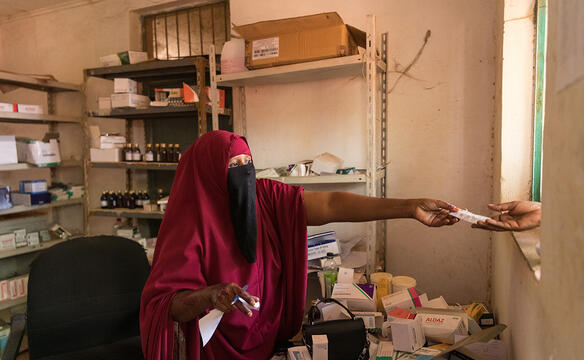
Patients receive the medicines they need in the pharmacies at the health posts
Semira* is a health worker trained by humedica who works in one such village station. She carries out educational work and vaccination campaigns in her community. For example, she registers pregnant women, takes them to the nearest health center and helps them with follow-up care after vaccinations. "I encourage them to give birth at the health center," she explains. There is a mother and child ward there. Without gynecological care, the risk of mothers and their children dying in childbirth is very high.
"I help those who need better medical care to go to Dollo Hospital," Semira lists as another of her tasks. In this clinic in the Dollo Ado district, which is supported by humedica, the medical services offered go beyond basic care. Trained doctors from various specialties work there and can carry out necessary operations, for example.
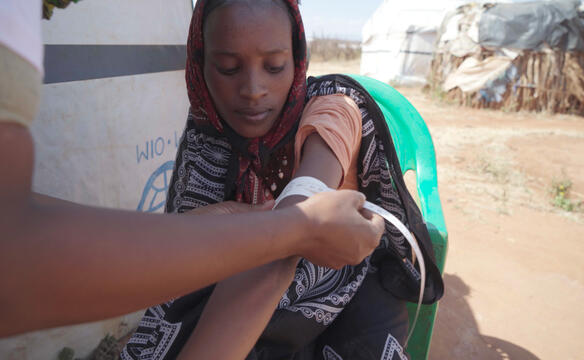
Regular examinations help to detect malnutrition at an early stage
The hospitals and regional health facilities are of crucial importance to the communities in the Somali region. The improved equipment and trained staff ensure that their health is guaranteed - even without having to travel for days on end.