

The situation on site
Ethiopia, the most populous landlocked country in the world, unites over 100 ethnic groups on its territory. Many different population groups live far away from any infrastructure, including healthcare. Cattle breeders populate rural areas, for example in the Somali region. Far from the state health centers, they are left to their own devices in the event of illness. The maternal and infant mortality rate at birth is extremely high without gynecological care.
Recurring droughts, conflicts and the influx of many internally displaced persons are putting strain on the already weak health infrastructure. There is a lack of medicines, trained personnel, water and electricity in health facilities. Women and girls are particularly affected by the consequences: they bear a high level of responsibility for their families, often have little influence on health decisions and are exposed to increased health risks. The situation has been exacerbated by the civil war in neighbouring Somalia – there are an estimated 170,000 refugees for every 150,000 inhabitants. More than ten per cent of all children here die before their fifth birthday.
How does humedica help?
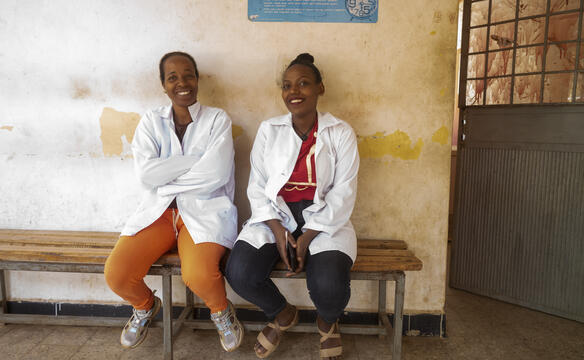
Training for medical staff, local health workers and community members

How you can help:
With 5 euros you provide health insurance for an entire family for a year
With 200 euros, you can put together a midwife's delivery kit (consisting of, among other things: Brochure, soap, plastic wrap, ribbons to tie the umbilical cord, plastic bag, razor blades, sterile gauze bandage, gloves)
1,600 euros can be used to train medical professionals (50 people)
A laboratory can be fully equipped with 12,500 euros